




The Haunted Location: 7 Ways to Make Any Place Terrifying in Your RPG
01Halloween is the perfect time to bring a little extra fear to your tabletop roleplaying game, but you don’t need a vampire lord, an army of undead, or a haunted mansion to make your players nervous. Sometimes the most terrifying thing you can do as a Game Master is make a familiar place feel wrong. A tavern where the fireplace whispers the names of dead patrons, a starship where someone keeps appearing on cameras despite being nowhere aboard, or a campsite where the trees seem to move whenever the characters look away can be far more unsettling than another encounter with a monster.
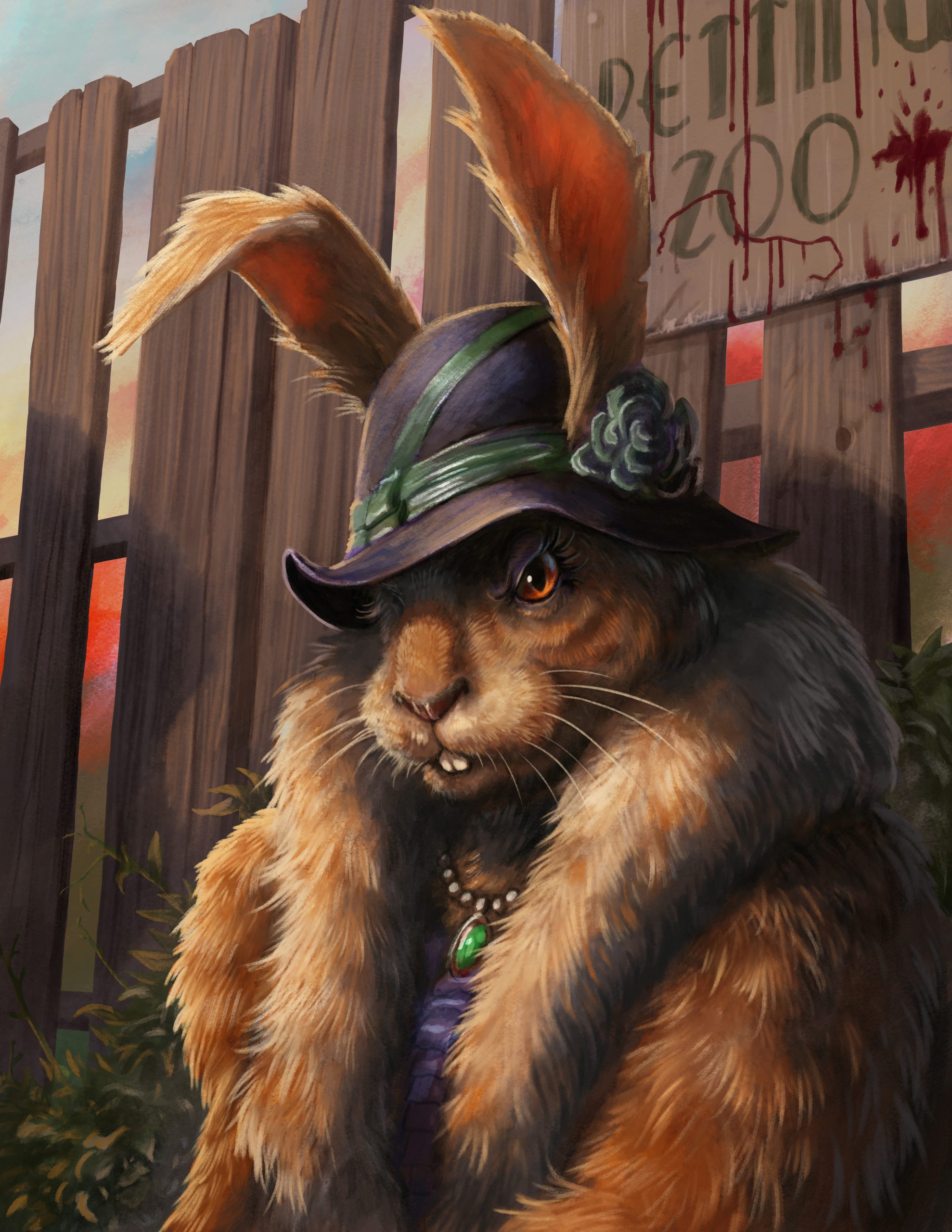
Welcome to Nerdarchy’s Halloween week series! Over the next six days, we’re exploring ways to bring the spirit of Halloween to your tabletop RPG sessions, with ideas for fantasy adventures, science fiction campaigns, mysteries, survival horror, and everything in between. We’ll visit the dangerous skies of Aether Skies, get into Halloween trouble with Zoo Mafia, and explore the unsettling possibilities of Under the Dome. Along the way, we’ll share ideas you can use in your own games, regardless of which RPG system sits on your table.
We’re kicking things off with one of the most useful tools in a GM’s horror toolkit: the haunted location. Whether you’re running Dungeons & Dragons, a modern supernatural investigation, a post-apocalyptic survival campaign, or a science fiction adventure on the edge of known space, these seven techniques can turn an ordinary location into somewhere your players won’t soon forget.
1. Make Familiar Places Feel Wrong

The easiest way to unsettle players is to take something they recognize and change one detail. Horror thrives on the moment when something familiar becomes just unfamiliar enough to trigger suspicion. A tavern might look exactly as it did the previous evening, except every portrait on the wall now depicts the same person. A character’s bedroom might have a second door that nobody remembers seeing before. The ship’s computer might greet the crew with the voice of a captain who died three missions ago.
The key is restraint. If everything is strange, nothing stands out. Give the characters a comfortable baseline, then introduce one detail that doesn’t belong. Let them investigate, compare notes, and wonder whether they missed something. When they return later and discover a second change, their earlier unease becomes genuine concern.
This technique works particularly well when the players have visited the location before. A dungeon they’ve explored, a home base they’ve improved, or a friendly NPC’s shop can become deeply unsettling when small details begin changing without explanation. Players are much more likely to worry about a familiar place than a random room they have no reason to care about.
2. Let the Environment Tell the Story
A haunted location shouldn’t need a ghost to announce its presence. The environment can do plenty of frightening work on its own, and it gives the GM a way to build tension without constantly interrupting the action.
Describe the cold patch that follows a character from room to room. Mention the smell of wet earth in a sealed underground chamber, or the sound of footsteps pacing overhead when the party is already on the highest floor. Perhaps the characters hear a child’s laughter coming from an empty corridor, or find muddy footprints leading toward a wall and stopping abruptly.
These details become more effective when they suggest a story without explaining it. Muddy footprints might belong to someone who entered the building during a storm, but why do they begin in the middle of a dry room? The footsteps overhead might be an ordinary intruder, but why do they continue after the characters reach the roof?
You don’t need elaborate descriptions every time. A single well-chosen detail can do more work than a paragraph of generic spooky atmosphere. Give players enough information to form their own theories, and let their imaginations fill in the frightening possibilities.
3. Make Silence an Encounter
Most tabletop RPG sessions are full of sound. Characters argue about plans, players joke around the table, dice roll, monsters roar, and the GM narrates the action. Silence can be surprisingly powerful when you use it deliberately.
Imagine a busy settlement where the party suddenly realizes every animal has stopped making noise. No barking dogs, no insects, no birds overhead. The wind still blows, but nothing else moves. Then the characters notice that the people around them have stopped talking, too. Every face has turned toward the same alley.
You don’t need to force your players to stop speaking. Instead, give their characters a reason to notice that something is missing. Sound can disappear from an entire forest, a crowded marketplace, a spaceship’s ventilation system, or a battlefield just before an attack. Even the absence of a familiar mechanical hum can make a science fiction setting feel wrong.
Silence also gives you a useful way to signal danger. Establish a location’s normal sounds early, then remove them when the situation changes. When the characters finally hear something moving in the darkness, they’ll know exactly why that sound matters.
4. Give the Location a Memory
The best haunted places feel as though something happened there long before the characters arrived. A location becomes much more interesting when its strange behavior reflects a history of betrayal, tragedy, violence, or unfinished business.
Perhaps a ruined manor repeats the final moments of its former inhabitants every night. A battlefield produces ghostly formations that march through the same doomed charge, unaware that the war ended centuries ago. An abandoned laboratory continues conducting experiments, and the doors open only for people whose names appear on a researcher’s missing-person list.
These manifestations shouldn’t be random decorations. Connect them to clues the characters can uncover. A repeating scream might come from a room whose door has been sealed for generations. A ghost that appears only near a particular statue might be trying to point out an inscription that someone deliberately removed. The characters should be able to learn something by paying attention, even if they don’t immediately understand what it means.
This approach gives horror adventures a natural investigative structure. The players explore, notice patterns, collect evidence, and gradually piece together the history behind the haunting. If they understand what happened, they might discover a way to stop it—or make a decision about whether stopping it is the right thing to do.
5. Make the Location React to the Characters

Looks safe enough. Perfectly reasonable to step inside.
A location becomes truly disturbing when it seems to notice the people exploring it. At first, the party might assume the strange events are coincidences. A door closes just before someone reaches it. A candle goes out when a character mentions a particular name. A corridor appears longer on the return journey than it was when the party entered.
Then the location begins responding to deliberate actions. The characters leave a chalk mark on a wall, only to find the same symbol appearing on the next three doors. They call out to one another from opposite ends of a hallway and hear their own voices answering from somewhere between them. One character asks whether anyone else heard a whisper, and a voice directly behind them replies, “Yes.”
The important thing is to make the location’s behavior consistent enough that players can experiment with it. If a building reacts to spoken names, the characters might try communicating without speaking. If doors change whenever someone looks away, they might establish a system of watchers. Their attempts to understand the phenomenon can become an encounter in their own right.
You can even make the location respond to the party’s history. A haunted house might recreate a character’s worst mistake, while an alien structure could imitate the memories of anyone who touches its walls. Keep the focus on giving the players choices rather than simply telling them what their characters experience.
6. Turn Ordinary Objects into Sources of Dread
Horror doesn’t always need enormous creatures or supernatural spectacles. Sometimes an everyday object becomes frightening precisely because it shouldn’t be doing anything unusual.
A telephone rings in an abandoned building, and the caller knows what the characters are doing. A child’s toy appears in different rooms despite being locked away. A security monitor shows a figure standing behind the characters, even though the hallway is empty when they turn around. In a fantasy setting, a mundane mirror might reflect a room as it appeared before a massacre, complete with people who have been dead for generations.
Objects work especially well because they provide something tangible for players to investigate. They can pick them up, examine them, test them, or decide whether they should destroy them. Each choice can reveal another piece of the mystery, but it can also carry a cost.
Resist the temptation to make every strange object a cursed magic item or a disguised monster. Sometimes an object exists to communicate a warning. Sometimes it draws attention away from a more immediate danger. Sometimes the characters will never discover precisely why it behaves as it does. A little uncertainty can make an ordinary object far more memorable than a detailed explanation of its magical properties.
7. Make Safety Feel Temporary
A frightening location needs more than strange noises and flickering lights. Eventually, the characters should have a reason to question whether they can trust the place at all.
Perhaps the party finds a room where the supernatural activity stops. The walls are warm, the lights work, and nothing strange happens inside. They can rest there, catch their breath, and plan their next move. After a while, though, they realize the room has no windows. Then they notice that the door has disappeared. The room might be protecting them from the haunting, or it might be keeping them somewhere the haunting cannot reach.
You can use this technique in almost any genre. A bunker that has kept survivors safe for years begins receiving messages from outside, despite every communication system being disconnected. A starship’s emergency shelter locks itself when the crew enters. A friendly village offers the adventurers shelter, but every resident insists they must leave before sunrise without explaining why.
Give players a genuine reason to value their refuge before you threaten it. If every location is immediately dangerous, the characters have nothing to lose. A place that once offered safety can become a powerful source of tension when the players realize its protection might not last.
Putting It All Together: The House That Remembers
Let’s bring these techniques together in a short adventure hook you can use in almost any tabletop RPG.
The characters arrive at a remote house after a long journey. Its owner, an elderly caretaker, welcomes them inside and offers food, shelter, and a place to rest. The house seems perfectly ordinary, although the caretaker insists they must never open the locked door at the end of the upstairs hallway.
During the night, a character hears footsteps crossing the ceiling. Another notices that a family portrait in the dining room now contains one additional person. The caretaker dismisses both discoveries, claiming the house has always been a little strange. Later, the characters hear a telephone ringing in a room where no telephone exists.
The house’s behavior escalates as the characters investigate. Doors lead to rooms they have already visited, but the furniture is arranged differently. A mirror shows the dining room filled with people who aren’t there. Scratches appear on the inside of the locked door, accompanied by a voice asking to be let out.
The caretaker finally admits that the house belonged to a family who disappeared decades ago. Every few years, the house begins repeating fragments of their final night, and someone eventually opens the forbidden door. What the caretaker doesn’t know is that the house has started repeating events that haven’t happened yet. One of the characters appears in the family portrait, and the voice behind the locked door sounds exactly like them.
What happens next depends on the game you’re running. The characters might discover a trapped spirit, an experiment that went wrong, an extradimensional creature using the house as a doorway, or something that doesn’t fit any explanation they know. You could run this as a supernatural mystery, a fantasy haunted-house adventure, a modern horror investigation, or a science fiction scenario aboard an abandoned research station.
The house is only a starting point. Change the setting, the history, and the nature of the threat to suit your campaign. The important part is that the characters have several clues to follow, a mystery they can investigate, and a location that becomes more dangerous the longer they stay.
Bring the Fear to Your Next RPG Session

Creating a terrifying location doesn’t require special rules, an elaborate monster manual entry, or a dedicated horror RPG. It starts with paying attention to the details your players normally take for granted, then introducing changes that give them a reason to question what they know.
Let familiar places become strange. Use environmental details to suggest a hidden story. Remove sounds the characters depend on, let locations react to their choices, and give ordinary objects an unsettling purpose. Most importantly, let the players investigate and make decisions rather than treating horror as a sequence of frightening things that happen to them.
Halloween is an excellent excuse to experiment with these techniques, but they’re just as useful in a year-round campaign. A haunted tavern can become a recurring mystery, a strange spaceship can launch an entire science fiction adventure, and an apparently safe settlement can become the most frightening place in a post-apocalyptic world.
And this is only the beginning of our Halloween week at Nerdarchy. Tomorrow, we’ll look at cursed treasures that offer powers too tempting to ignore, even when their owners discover the price of keeping them. After all, the only thing more dangerous than exploring a haunted house might be finding something inside it that you really, really want to take home.
Stay nerdy, and keep your dice ready. You never know what’s waiting in the next room.



No Comments